
Wallpaper borders are making a confident return, and this time they feel fresh, relevant, and surprisingly versatile. Although once considered outdated, they are now being reintroduced into homes with a modern twist. As trends shift away from strict minimalism, more character and pattern are being welcomed back into interiors. Consequently, wallpaper borders are being embraced once again as an easy yet impactful design feature.
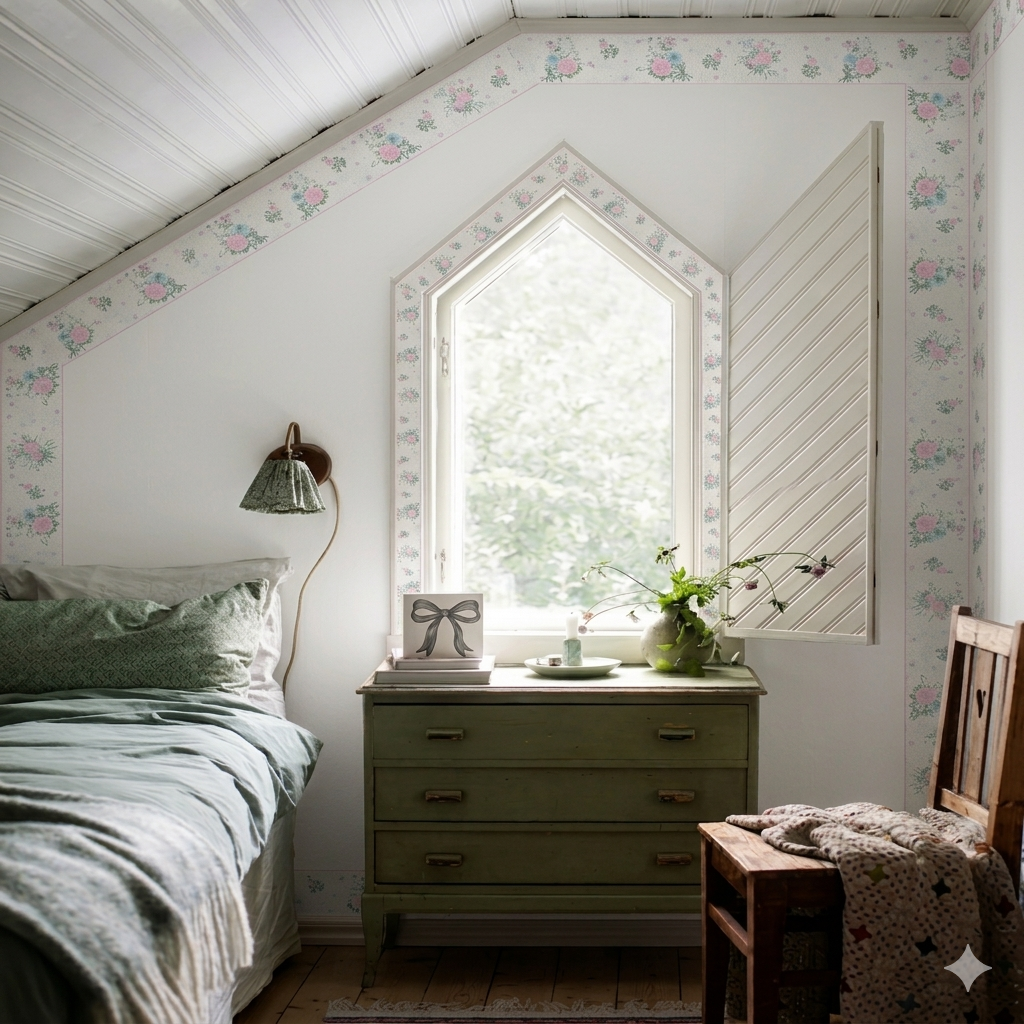
What Is a Wallpaper Border?
A wallpaper border is a decorative strip designed to frame or highlight areas of a room. Traditionally, it has been placed at the top of a wall where it meets the ceiling. However, it can also be used above a dado rail, along skirting boards, or even around architectural features.
Although the concept may feel nostalgic, its origins date back to the 18th century, when decorative detailing was used to enhance interiors while also disguising imperfections. At that time, intricate hand-painted designs were often applied, and as a result, borders became both practical and ornamental.
Why Wallpaper Borders Are Trending Again
For many years, wallpaper borders were overlooked. This was largely due to the rise of minimalist interiors in the 1990s and early 2000s, where clean lines and plain walls were preferred. However, design trends have gradually shifted.
Today, classic English interiors, layered patterns, and bold colour combinations are being celebrated once more. As a result, wallpaper borders are being rediscovered by both homeowners and designers.
In addition, brands such as Zig Zag Stripe Borders are reimagining traditional designs with a contemporary edge. Inspired by 19th-century French textiles, these updated patterns bring a sense of heritage while still feeling current.
How to Use Wallpaper Borders in Your Home
Although wallpaper borders were once used in predictable ways, they are now being applied far more creatively. Because of this, they can suit both traditional and modern interiors.
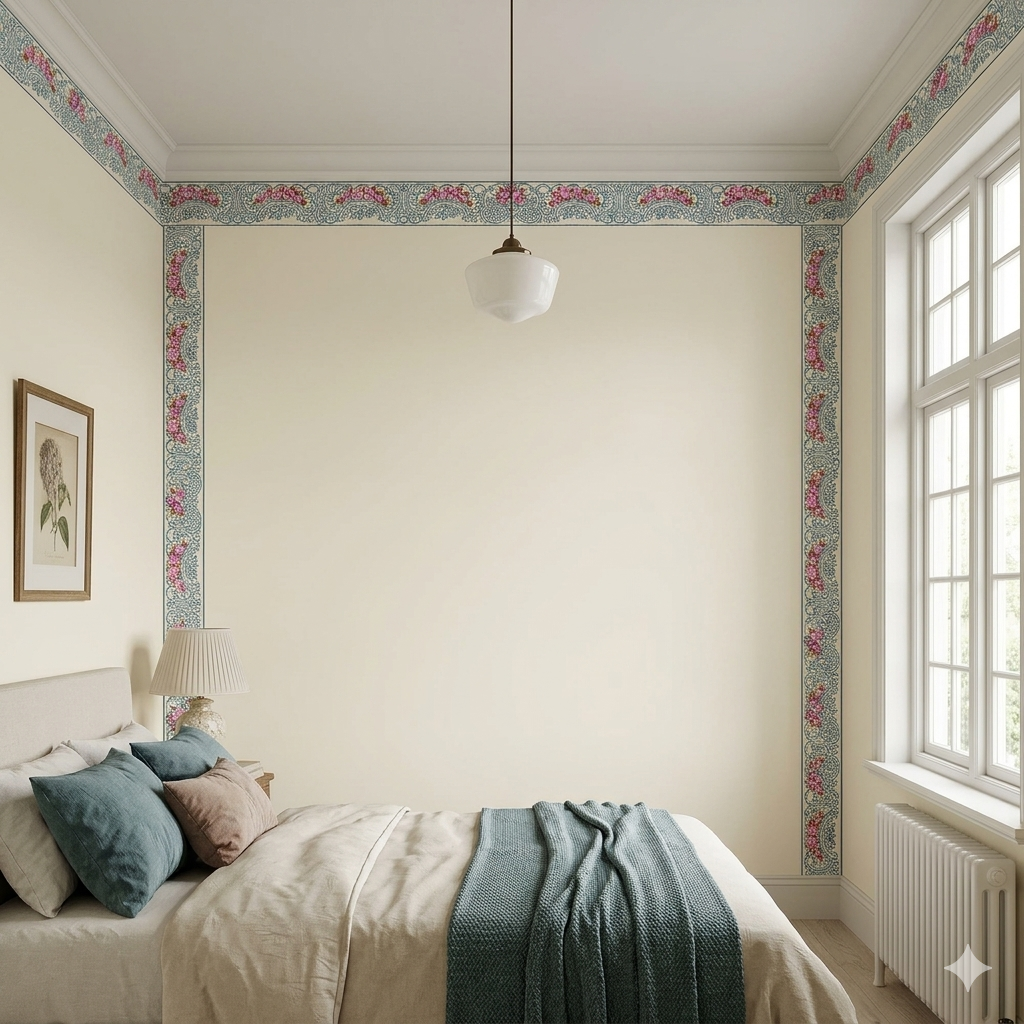
1. Frame the Top of the Wall
The most classic placement is along the ceiling line. While this approach remains popular, it is now often paired with bold paint colours or subtle wallpapers to create contrast. As a result, the border becomes a defining feature rather than just a finishing touch.
2. Highlight Architectural Features
Borders can be used to draw attention to elements such as dado rails, alcoves, or панelling. In many cases, they are applied to create visual structure within a room. This technique is especially effective in period properties.
3. Create a Statement Stripe Effect
In the former home of John Fowler, The Hunting Lodge, a floral wallpaper border was used repeatedly to form vertical stripes. This inventive approach shows how borders can go beyond their traditional role.
4. Tie Together a Colour Scheme
If your room features multiple colours or patterns, a wallpaper border can unify the look. For example, it can pick up tones from fabrics, artwork, or wall colours. Consequently, the entire space feels more cohesive.
5. Add Contrast to Neutral Rooms
While neutral interiors remain popular, they can sometimes feel flat. Therefore, introducing a bold wallpaper border provides contrast without overwhelming the space.
6. Use as Decorative Trim
Borders are not limited to walls. They can also be used creatively:
- Around a headboard
- Framing wooden panelling
- As a transition between paint and wallpaper
- Even to outline doors or shelving
Because they are easy to apply, these smaller applications are ideal for experimenting with patterns.
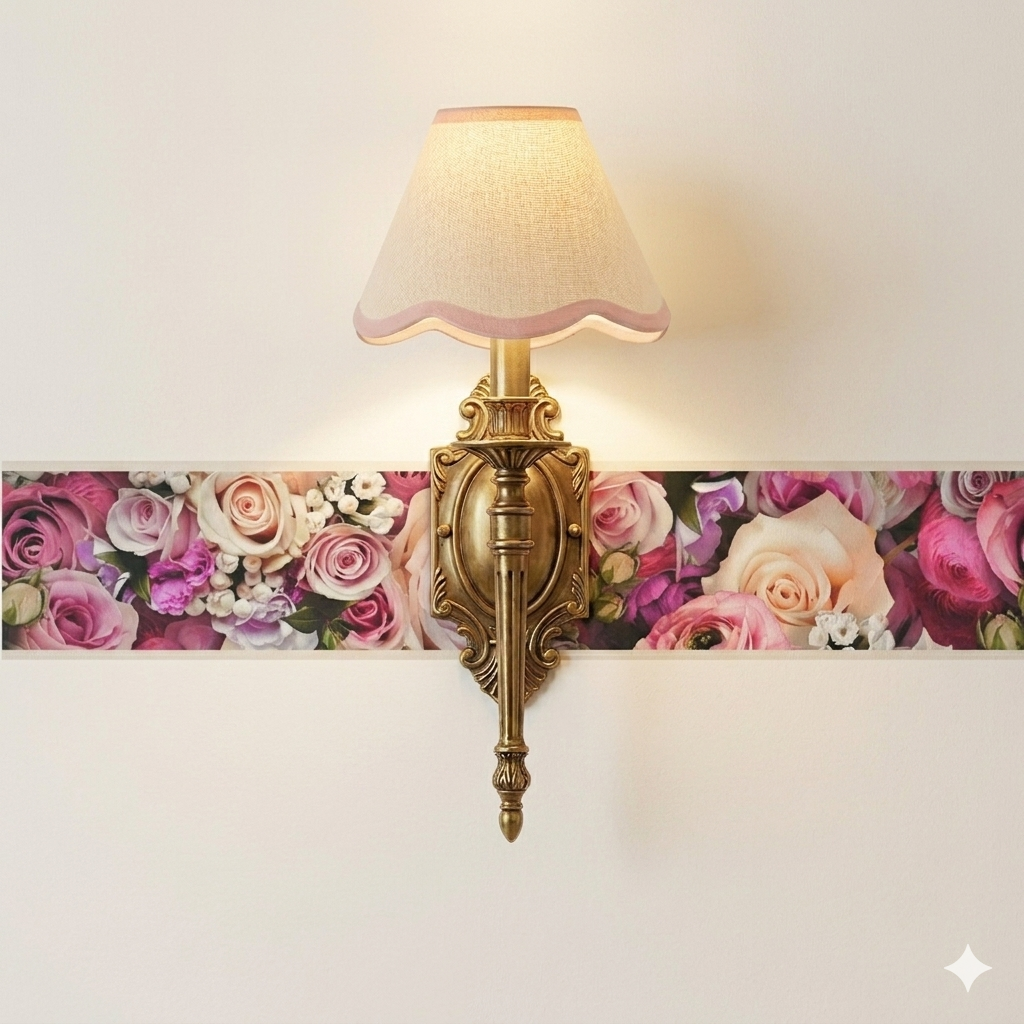
Benefits of Wallpaper Borders
Although full wallpapering can transform a room, it often requires time, cost, and commitment. In contrast, wallpaper borders offer a simpler alternative.
- Cost-effective: Fewer materials are needed compared to full rolls
- Easier to install: Ideal for DIY projects
- Flexible design option: Can be updated without redecorating the entire room
- Adds instant character: Even a small border can elevate a space
As a result, they are particularly appealing for those who want a decorative update without a major overhaul.
Passive and Active Design Approach
Wallpaper borders are often used to enhance a room subtly, allowing other elements to shine. At the same time, they can actively define a space, especially when bold colours or patterns are chosen.
For instance, a border may be placed to soften the transition between wall and ceiling. Alternatively, it can be used more deliberately to create visual impact. Because of this balance, both passive and active design roles are achieved.
Common Mistakes to Avoid
Even though wallpaper borders are versatile, a few common pitfalls should be avoided.
- Overusing patterns: Too many competing designs can feel overwhelming
- Incorrect placement: Poor positioning can disrupt proportions
- Ignoring scale: Large patterns may overpower smaller rooms
- Skipping preparation: Walls should still be properly measured and aligned
By planning carefully, these issues can easily be prevented.
Final Thoughts: A Simple Way to Transform Your Space
Wallpaper borders may not be new, but they are undeniably relevant again. While they were once dismissed as outdated, they are now being reinterpreted in creative and stylish ways. As trends continue to favour personality and warmth, their popularity is only expected to grow.
Ultimately, whether you choose a subtle design or a bold statement, wallpaper borders provide an accessible way to experiment with pattern. Moreover, they allow you to refresh a room without committing to full wallpaper coverage.
If you’re looking for an easy yet effective update, this revived decorating feature is well worth considering.
Look at our HOW TO GUIDE HERE.
+
Leave a Reply